


Perovskite: The Next Big Leap in Solar PV in India?
While India is scaling TOPCon, Perovskite and tandem technologies are emerging as the next frontier in efficiency. As the industry looks at the path from laboratory breakthroughs to commercial production, Energetica India spoke to industry stakeholders to understand how manufacturers are preparing for this next phase of solar PV.
October 30, 2026. By Mrinmoy Dey


Moreover, India’s solar manufacturing base is expanding rapidly, with about 228 GW of module and 36.86 GW of cell capacity listed under the Ministry of New and Renewable Energy’s (MNRE) September 2026 ALMM update. With ingot-wafer manufacturing also set to enter the ALMM framework from June 2028, the focus must also be on keeping pace with technological upgrades alongside increasing scale.
The Perovskite Promise: The Race for Higher Efficiency
Perovskite solar cells offer higher efficiency potential, lightweight structures, low-temperature processing and lower manufacturing energy requirements than conventional silicon cells. More significantly, when combined with silicon in tandem cells, Perovskites have achieved much higher laboratory efficiencies than today’s commercial silicon cells, making them a promising next-generation PV technology.
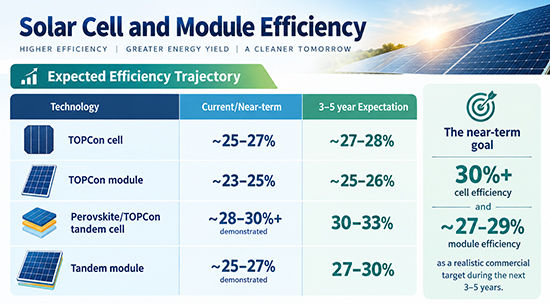
 Gautam Mohanka, Managing Director, Gautam Solar, says, “In the period from the next three to five years, I anticipate that tandem cells will gradually move from laboratory development to commercial projects. Cell efficiency is likely to reach 30 percent while commercial module efficiency may be 25-27 percent as production technology matures.”
 The transition, however, is likely to be evolutionary rather than abrupt. Gyanesh Chaudhary, CMD, Vikram Solar, describes perovskite-silicon tandem as “a genuine inflexion point for photovoltaics”, but says the more relevant question for India is “one of sequencing, not intent”. With TOPCon already accounting for more than 70 percent of India’s module capacity, the technology could provide a logical bridge to tandem manufacturing.
He further adds, “China has already advanced multi-gigawatt worth of perovskite capacity toward commercial scale, whereas India’s immediate focus remains scaling TOPCon. That gap is a timeline challenge that India can close, not by skipping steps, but by using TOPCon-perovskite tandem as a logical bridge that builds directly on our expanding silicon infrastructure.”
 Samir Mehta, CEO, Zuvay Technologies, highlights that TOPCon–perovskite tandem is currently at the transition from laboratory/pilot scale toward industrial demonstration. “The technology is considerably less mature than conventional TOPCon, but it is arguably one of the most credible pathways to achieve over 30 percent commercial module efficiency,” he says.
He further states that a conventional TOPCon silicon cell is approaching its practical commercial efficiency ceiling. “Adding a perovskite top cell allows the solar spectrum to be divided between the two absorbers, substantially increasing efficiency without requiring a corresponding increase in module area.”
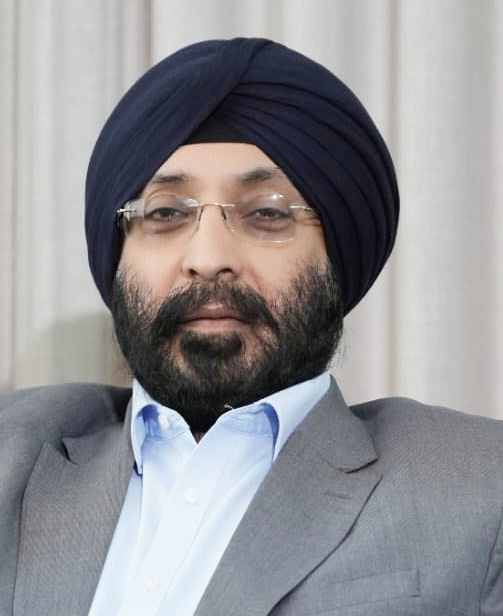
 Prof. Dinesh Kabra, Founder, ART-PV India | New Materials Lab, IIT Bombay puts the proposition more simply: “Perovskite will not replace silicon in India; it will make silicon better. The realistic ‘next big leap’ is a TOPCon-perovskite tandem, which layers perovskite's high-voltage capability on top of the TOPCon cells India's industry is already investing in, rather than asking manufacturers to bet on an entirely new architecture.”
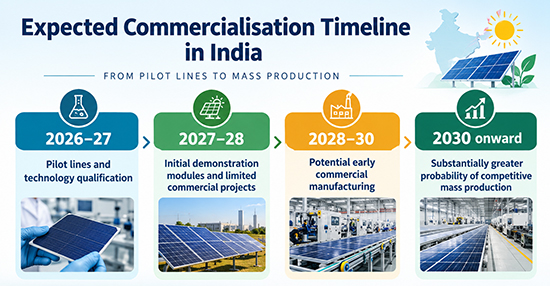
 US-based Caelux Corporation is more bullish on the commercial timeline. Vish Iyer, Managing Director of India & Middle East at Caelux, says perovskite-plus-silicon modules are “already entering the commercialisation phase”, citing its multi-gigawatt, multi-year partnerships with Indian module manufacturers. Caelux is targeting initial perovskite-plus-TOPCon module efficiencies of up to 28 percent and commercial availability by 2028, including compliance with India’s ALMM requirements.
Technical and Commercial Challenges of Perovskite Adoption
A commercial PV module is expected to operate for 25–30 years. Demonstrating that lifetime at the module level is substantially harder than demonstrating a high cell efficiency in a laboratory.
Lead Management and Environmental Considerations: Most high-performance perovskites currently use lead-containing compositions. Although the quantity of lead per module can be relatively small, manufacturers will need robust encapsulation, recycling, end-of-life management, manufacturing controls and regulatory compliance. This can become a significant issue for large-scale deployment.
Yield and Reproducibility: Laboratory cells can achieve excellent efficiency over relatively small areas. The challenge is to get high efficiency × large area × high yield × high throughput × low cost. A 30 percent cell with a 60 percent manufacturing yield may be economically inferior to a 27 percent cell with a 95 percent yield.
Encapsulation: Perovskite is much more sensitive to environmental conditions than crystalline silicon. Consequently, tandem modules require sophisticated barrier films, edge seals, encapsulation and moisture/oxygen protection. The encapsulation system must also survive thermal cycling and mechanical stresses for decades.
Economics: The additional perovskite process must deliver enough additional watts per square meter to justify new equipment, additional materials, clean-room requirements, additional process steps, yield losses, capital expenditure and qualification costs.
 Ankit Singhania, Director, Navitas Solar, adds, “There will need to be some trials to demonstrate the Proof of Concept (PoC), and initial installs may be for small to mid-scale C&I segments. The challenge for immediate scaling will be the absence of established bankability track records that lenders and insurers require for utility-scale projects.”
In collaboration with the National Institute of Solar Energy (NISE), P3C Technology and Solutions is subjecting modules to rigorous IEC 61215-class testing — the damp-heat, thermal-cycling and humidity-freeze protocols that crystalline silicon has long been benchmarked against.
 Sooraj Singh, Co-Founder and CEO, P3C Technology and Solutions, emphasises, “This is deliberately different from citing lab-scale stability results alone: running Indian modules through internationally recognised test protocols, on Indian soil, under India's own heat, humidity and UV conditions, is what starts to generate the kind of field-credible reliability data that certification bodies, financiers and utilities will eventually require before backing perovskite at scale.”
Is TOPCon–Perovskite the Right Bridge?
Mehta sees this as one of the technology’s strongest commercial advantages. Rather than replacing silicon PV, tandem technology adds a high-efficiency perovskite top cell to an industrialised silicon platform, allowing manufacturers to retain substantial portions of their existing technology and TOPCon lines. He therefore considers TOPCon-perovskite “a relatively low-risk evolutionary route” compared with building an independent perovskite PV manufacturing ecosystem.
 Hardip Singh, COO, GREW Solar, sees TOPCon as a practical bridge to higher-efficiency technologies. “It also gives us a way to build on the investments being made in TOPCon today rather than treating the next generation of solar technology as a completely new manufacturing ecosystem.” However, the company cautions that tandem technology still faces challenges around interfaces, thermal processing, light management and long-term stability. “It could be a more realistic bridge between today's silicon manufacturing base and the higher-efficiency solar technologies of the future.”
Prof. Kabra shares, “At ART-PV India, we have developed a complete technical solution for integrating a perovskite top-cell process into an existing TOPCon production line — addressing temperature-budget compatibility (keeping perovskite deposition below 100°C so that it doesn't disturb the finished TOPCon junction), busbar and finger redesign to control sheet-resistance losses at scale, and recombination-layer engineering to reduce indium dependency.”
He further adds, “What India genuinely lacks today isn't a technical answer; it's the collective conviction to invest in commercial-scale cell and throughput while the technology is still developmental, rather than waiting for a ready-made turnkey solution to arrive from abroad. That hesitation is understandable, but it has a cost: the countries running pilot lines today are the ones who will own the manufacturing know-how tomorrow. We believe this only gets de-risked by attempting it at scale.”
For Iyer, the transition will require more than technology alone. “Deploying breakthrough technologies requires a partnership approach,” he says, with manufacturers needing to move beyond a buyer-supplier relationship and participate in developing the next generation of solar technology. “Caelux’s initial Indian partners have demonstrated that maturity by committing to partnership approaches,” asserts Iyer.
At the same time, manufacturers will also need confidence around warranties, certification, supply chains and the long-term availability of materials. “Until those pieces are established, large-scale adoption will remain measured,” quips GREW’s Singh.
The Shift to Perovskite and Tandem: Is the Timing Right?
 Chirag Nakrani, Founder and Managing Director, Rayzon Solar favours a parallel approach. “TOPCon is a proven and bankable technology, so it will remain important for the industry for years to come. But at the same time, we should not build today's manufacturing ecosystem without preparing for tomorrow's technology. Perovskite and tandem technology should therefore be developed alongside TOPCon. We don't need to replace one technology overnight. We need to keep improving efficiency while building a strong domestic supply chain.”
Mohanka believes that India should pursue both objectives simultaneously. “Building a domestic upstream ecosystem through backward integration is essential,” he says, adding that India should strengthen commercially proven technologies such as TOPCon while investing in the next generation through R&D, pilot lines and industry-academia collaboration. Perovskite and tandem technologies, therefore, should form the next layer of India's manufacturing roadmap rather than immediately replace established technologies.
Chaudhary emphasises that the immediate priority should remain domestic scale-up of proven technologies under ALMM List-II, alongside targeted tandem R&D focused on degradation and stability. “Near-term efficiency headlines will ultimately take a backseat to bankability, levelized cost of electricity (LCOE), and field reliability,” he says. At the same time, he sees capacity expansion and next-generation R&D as parallel priorities if India is to compete in global markets.
For GREW’s Singh, the priorities are similarly complementary. “If you ask me what India should prioritise today, my answer would be TOPCon and deeper domestic integration. If you ask me what India should be preparing for, I would put the TOPCon-perovskite tandem very high on that list,” he asserts.
Singhania views ALMM-II and ALMM-III as important foundations for India's move towards higher-efficiency technologies. “Technologies adopted by us and other leading players are principally designed for future readiness of technologies such as Integrated Back Contact (IBC) and Perovskite, all being aligned to seek higher efficiencies over time. Perovskite has strong long-term potential, and its adoption would build on an existing robust domestic manufacturing ecosystem rather than compete with the capacity-building priorities that India is building,” he opines.
P3C Technologies sees the present period as an opportunity to establish domestic capability in next-generation PV. “India should develop perovskite alongside TOPCon and other mature technologies, rather than in competition with them. At P3C, we believe this is the right time to build that ecosystem, so that perovskite and hybrid tandems are ready for large-scale deployment precisely as their reliability and economics mature,” asserts Singh.
Manufacturing Modifications for TOPCon-Perovskite Tandems
Prof. Kabra highlights that existing TOPCon lines can accommodate these changes through bolt-on additions rather than replacement. These could include a low-temperature perovskite deposition module (slot-die or evaporation/close-space-sublimation based), ALD and RF-sputtering stations compatible with sub-100°C processing, glovebox-integrated handling for moisture-sensitive steps, and an encapsulation module suited to perovskite stability needs.
A different route is offered by Caelux through its perovskite-on-glass technology, which introduces the perovskite layer at the module stage rather than directly onto the silicon cell. “This allows manufacturers to seamlessly integrate the technology within their existing module manufacturing processes, using a plug-and-play approach, without fundamentally re-engineering or retrofitting their TOPCon cell lines, thereby maximising yield, lowering LCOE and increasing module capacity,” explains Iyer.
Talking about the challenges of integrating Perovskite with TOPCon, Mehta says that process integration is probably the most important issue for an existing TOPCon manufacturer. “The TOPCon bottom cell must emerge from the silicon production line with an extremely clean and well-controlled surface. The tandem process should generally be designed as a low-temperature back-end addition to the completed TOPCon cell, which is doable with control on yield,” he says.
Throughput is another key consideration. “A conventional TOPCon production line may be designed for very high wafer throughput, so the perovskite deposition system must eventually operate at comparable throughput. Processes such as slot-die coating, inkjet printing and vapour deposition must therefore be evaluated not only for efficiency but also for m²/hour, uniformity and uptime,” explains Mehta.
The exact equipment depends on the selected tandem architecture and perovskite deposition technology, but an existing TOPCon factory would typically need an additional perovskite/tandem back-end line, shares Mehta, further adding that the major addition is essentially the tandem integration section.
| Process | Equipment required |
| TOPCon surface preparation | Cleaning/surface activation |
| Perovskite deposition | Slot-die coating, inkjet, vapour deposition or hybrid system |
| Perovskite crystallization | Controlled thermal/annealing system |
| Transport layer | ETL/HTL deposition equipment |
| Transparent electrode | Sputtering/evaporation/other TCO deposition |
| Patterning | Laser scribing/laser isolation |
| Dry processing | Controlled low-humidity environment |
| Encapsulation | Advanced encapsulation and edge-sealing equipment |
| Inspection | EL, PL, optical and electrical inline inspection |
| Testing | Tandem-specific IV, spectral and stability testing |
| Environmental control | Dry rooms / controlled atmosphere |
| Chemical handling | Perovskite precursor preparation and dispensing systems |
Are Manufacturers Ready for the Upgrade?
“However, viability will be defined not simply by efficiency but by INR/W, degradation, reliability, yield and manufacturing throughput,” asserts Mehta.
Manufacturers are already making headway. Rayzon is building its TOPCon manufacturing base while preparing for next-generation solar technologies. Its partnership with Caelux will combine TOPCon manufacturing capabilities with perovskite technology to develop 5 GW of high-efficiency tandem modules, with commercial production targeted from 2028. “We want Rayzon to be not just a large-scale solar manufacturer, but also a company that adopts and helps bring the next generation of solar technology to India,” remarks Nakrani.
Navitas plans to combine Caelux's perovskite-coated “active glass” with its N-type TOPCon modules to produce 5 GW of Hybrid Tandem modules targeting up to 28 percent conversion efficiency, with commercial rollout planned by 2028. “We see our role as being an early adopter once stability data is proven at scale, rather than a first-mover on unproven chemistry,” says Singhania.
GREW Solar, in September 2026, entered into a 4 GW, five-year commercialisation partnership with Caelux to produce high-power Hybrid-Tandem solar modules using Caelux's innovative perovskite energy-producing glass.
|
Recommended Tandem Strategy for Indian TOPCon Manufacturers
Samir Mehta, CEO, Zuvay Technologies, recommends a phase-wise transition to TOPCon-Perovskite Hybrid Tandem commercial production. Phase 1: Technology Evaluation Establish a small pilot/R&D line and evaluate:
Phase 2: Pilot Production
Build approximately 10–50 MW/year pilot capacity.
Phase 3: Demonstration Manufacturing and Commercial Scale Production Move toward approximately 100–300 MW/year and demonstrate bankable module performance. Based on results, add a 500 MW–1 GW+ tandem production line, preferably as an incremental extension of the existing TOPCon facility. |
Can India Turn Technology into an Export Advantage?
Higher-efficiency tandem modules could give Indian manufacturers a new basis for differentiation. Mohanka believes that efficiency can become particularly valuable in markets where land and balance-of-system costs are significant. “Should India advance its tandem technology to commercial scale along with significant manufacturing efficiency and sufficient domestic supply-chain depth, it will give rise to a great competitive edge,” he said.
But he cautions that efficiency alone will not determine competitiveness. Indian manufacturers will need to combine higher efficiency with reliability and sufficient domestic supply-chain depth.
For exports, this also gives Indian manufacturers a way to compete on technology and performance, and not just price. “TOPCon gives us scale and bankability today; tandem technology can give us higher efficiency and differentiation tomorrow. The future of solar will be about the lowest cost of electricity over the lifetime of the module, rather than simply the lowest module price,” emphasises Nakrani.
Singhania points to another potential advantage: logistics. Higher wattage per module can help optimise freight costs, while higher efficiency can reduce balance-of-system costs for overseas buyers. “Once bankability is established, tandem technology could therefore become a meaningful differentiator in mature markets such as Europe and the Middle East, where efficiency can command a premium, rather than in the more price-sensitive domestic market,” he adds.
GREW’s Singh, however, argues that the export opportunity should be viewed through the entire manufacturing chain, not just the module. India's dependence on imported upstream materials and equipment can still add to costs, making deeper domestic integration important for long-term competitiveness.
“The winners in export markets will be those who can combine higher efficiency with competitive pricing, dependable delivery and consistent quality,” he asserts.
That may ultimately be the most useful way to assess perovskite's potential. It is not a question of whether the technology can achieve a higher efficiency number. The real question is whether it can translate that number into lower lifetime electricity costs at industrial scale.


please contact: contact@energetica-india.net.


Vaibhav Mutha
Director

Valeo’s Vaibhav Mutha on Scaling India’s Domestic PV Ribbon Manufacturing
Bhupendra Singh Rawat
CEO

Dhash’s Bhupendra Singh Rawat on Building India’s Solar Component Ecosystem
Praveen Lala
President

Kimbal Targets Australia and Southeast Asia for Global Expansion
Prassann Daphal
CEO

Prassann Daphal, CEO, Recyclekaro, on Building India’s Critical Mineral Recycling Ecosystem
Amitabh Dewan
Head of Large Corporate Risks

Evolving Climate Risks Are Reshaping RE Insurance: Amitabh Dewan, Policybazaar for Business